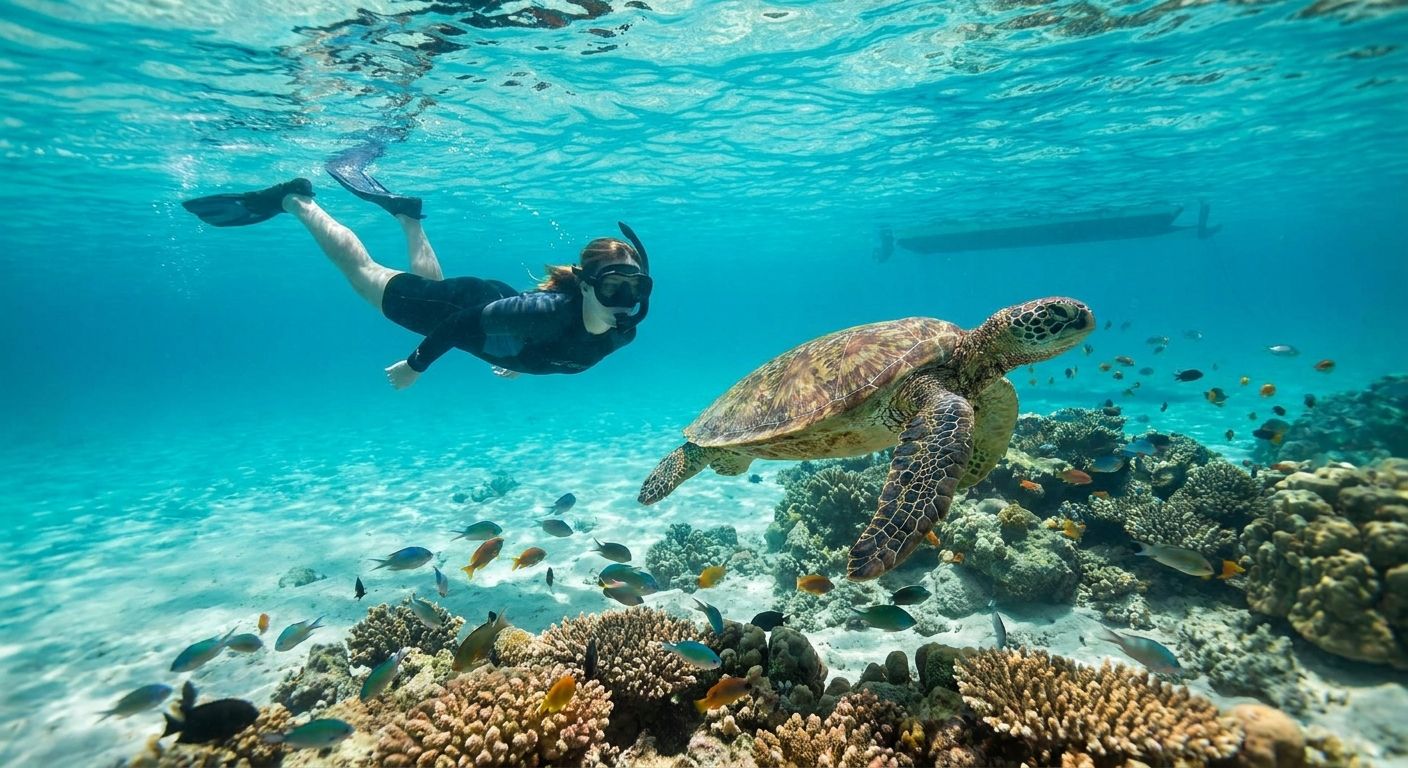
Turtle Bay sits along Hurghada's southern reef line, and it's the one boat stop where snorkelers ask the crew "did we see one yet" before they've even got their fins on. This guide breaks down what actually matters if turtles, not just coral, are the point of your trip.
- Turtle Bay snorkeling in Hurghada rewards early departures — turtles feed in the shallows before boat traffic picks up.
- Dolphin House and Giftun Island both pair reliably with turtle sightings and suit wildlife-first travelers in 2026.
- Shaab Abu Nuhas is the wildcard pick: wreck structure draws turtles and reef fish together on one dive.
- Non-swimmers get a real shot at turtle encounters with a guided, low-current itinerary — skip trips that skip the briefing.
Why this matters
Most "snorkeling trip" listings in Hurghada sell the same three reefs and call it a wildlife tour. Turtle Bay snorkeling is different because the site's seagrass beds are an actual feeding ground, not a photo backdrop — the turtles are there because they're eating, and that changes how a boat crew should run the stop.
Getting a turtle encounter right in 2026 comes down to timing, crew behavior, and group size, not luck. Get any one of those wrong and you'll spend forty minutes watching parrotfish instead.
Who this is for
This guide is for travelers who care more about a turtle surfacing three feet away than about ticking off a reef checklist — families with older kids who've watched enough nature documentaries to know a green turtle from a hawksbill, couples who want one wildlife-heavy stop over a full-day island hop, and photographers chasing a specific shot rather than a general reef tour. If you want the broadest overview of options first, start with picking the right island boat trip before locking in a wildlife-specific one.
What to look for in a turtle-focused snorkeling trip
Confirmed feeding-ground stops, not general reef drops
A boat that anchors over open reef gives you fish and coral, but turtles concentrate over seagrass beds where they graze. Ask whether the itinerary names a specific bay or shallow flat — a vague "we'll find something" answer is a red flag for 2026 bookings.
Small group size at the sighting spot
Turtles dive when six snorkelers thrash toward them at once. Groups capped around 10-12 per guide in the water hold a calmer pace and get closer, quieter encounters than 25-person party boats.
Morning departure times
Turtles feed actively in the first few hours after sunrise before boat traffic and midday heat push them into deeper water. A 7:30-8:00 AM departure beats a 10:00 AM one for actual sighting odds, even on the same reef.
A crew that briefs on turtle etiquette
No touching, no chasing, keep two meters distance — this isn't just conservation talk, it's what keeps a turtle in view instead of bolting for deep water. If the pre-snorkel briefing skips this entirely, expect a rushed encounter.
Reef health at the site
Turtles skip damaged or bleached coral areas because their seagrass and algae food sources thin out there. A healthy reef base is a decent proxy for reliable sightings season after season.
Non-swimmer and mobility access
Some of the best turtle encounters happen in water shallow enough to stand in, which opens the trip to non-swimmers and less confident snorkelers — worth checking before you assume you need strong swimming skills.
Top picks for wildlife lovers
Dolphin House — the reliable pick
This stop pairs open-water dolphin pods with reef snorkeling, and its shallow lagoon sections regularly bring snorkelers within a few meters of feeding turtles. Group sizes on the Dolphin House snorkeling trip for wildlife lovers run smaller than standard island-hop boats, which matters more for turtle sightings than dolphin ones. Buy if wildlife variety, not just turtles, is the goal.
Giftun Island — the safe pick for beginners
Giftun's shallow fringing reef sits close to shore, so first-time snorkelers get calm conditions alongside a real shot at turtle sightings without open-water currents. The Giftun Island snorkeling trip for beginners runs on a slower pace than most Hurghada boat trips, which suits nervous swimmers and patient photographers equally. Buy for anyone snorkeling for the first time.
Shaab Abu Nuhas — the wildcard
This wreck site draws turtles that use the sunken hulls as shelter and grazing structure, so you get marine archaeology and wildlife in one stop. The Shaab Abu Nuhas wreck snorkeling trip from Hurghada suits confident swimmers comfortable with slightly deeper water over the wreck structure. Consider if wreck history interests you as much as the turtles do.
Mahmya Island — the crowd-pleaser, skip for pure wildlife focus
Mahmya's white-sand beach and beach-club setup draw bigger day-trip crowds, which pushes turtles further from the main snorkeling zone during peak hours. It's a fine general island day, just not the pick when a turtle sighting is the entire point of the trip. Skip for wildlife-first travelers, consider if the group wants beach time too.
Non-swimmer access — the accessible pick
Shallow entry points and guided flotation support mean non-swimmers don't have to sit this one out. The snorkeling trips for non-swimmers in Hurghada itinerary prioritizes calm, shallow stops over deep reef drops, which happens to overlap with where turtles feed anyway. Buy for mixed-ability groups traveling together.
Book a wildlife snorkeling trip
Clear price, pickup confirmed, no hidden fees on any 2026 departure.
What to avoid
- Midday-departure boats — by 11 AM, turtles have moved to deeper water and boat traffic has picked up around every shallow bay.
- Party-boat itineraries with music and 30+ passengers — the noise and splash pattern pushes wildlife away from the snorkel zone before you're even in the water.
- "All-inclusive island hop" trips that don't name a specific turtle site — if the itinerary lists five stops with no mention of seagrass beds or feeding grounds, sightings are a coincidence, not a plan.
Verdict comparison
| Trip | Turtle Sighting Odds | Group Size | Best For | Verdict |
|---|---|---|---|---|
| Dolphin House | High | Small | Wildlife variety | Buy |
| Giftun Island | High | Medium | First-timers | Buy |
| Shaab Abu Nuhas | Medium-High | Medium | Confident swimmers | Consider |
| Mahmya Island | Low-Medium | Large | Beach + group days | Skip for wildlife focus |
| Non-swimmer itinerary | Medium-High | Small | Mixed-ability groups | Buy |
FAQ
What's the best turtle bay snorkeling trip in Hurghada?
Dolphin House and Giftun Island rank highest for reliable turtle sightings in 2026 because both stop over shallow feeding grounds with smaller group sizes than standard island-hop boats.
Is Turtle Bay snorkeling in Hurghada good for non-swimmers?
Yes — shallow entry points at several sites let non-swimmers snorkel with guided flotation support, and turtles often feed in water calm enough to stand in.
How much does a turtle bay snorkeling trip in Hurghada cost?
Pricing varies by boat size, group size, and whether the trip is private or shared, so check current rates directly for a 2026 departure date.
What time of day are turtle sightings most likely?
Early morning departures between 7:30 and 8:00 AM see the highest sighting rates because turtles feed actively before boat traffic and heat push them into deeper water.
Can beginners snorkel safely at turtle sites in Hurghada?
Beginner-friendly sites like Giftun Island keep conditions calm and shallow, making them a safer starting point than open-water reef drops for first-time snorkelers.
Do I need diving certification to see turtles in Hurghada?
No — turtles are commonly seen while snorkeling at the surface, and certified diving is not required for any of the trips covered in this guide.
What species of sea turtles live in the Red Sea?
Green sea turtles and hawksbill turtles are the two species most commonly seen on Red Sea reefs and seagrass beds around Hurghada.
Is Shaab Abu Nuhas good for wildlife lovers or just wreck divers?
Both — the wreck structure at Shaab Abu Nuhas attracts turtles and reef fish alongside its historical wreck sites, so it works for wildlife-first snorkelers too.
One last thing
The detail most trip listings skip: turtles at seagrass beds surface for air far more often while actively feeding than while resting, sometimes every few minutes rather than every half hour. That's exactly why an early, unhurried morning stop beats a rushed midday one — you get more surfacing windows to actually see one, not just a reef full of empty seagrass.