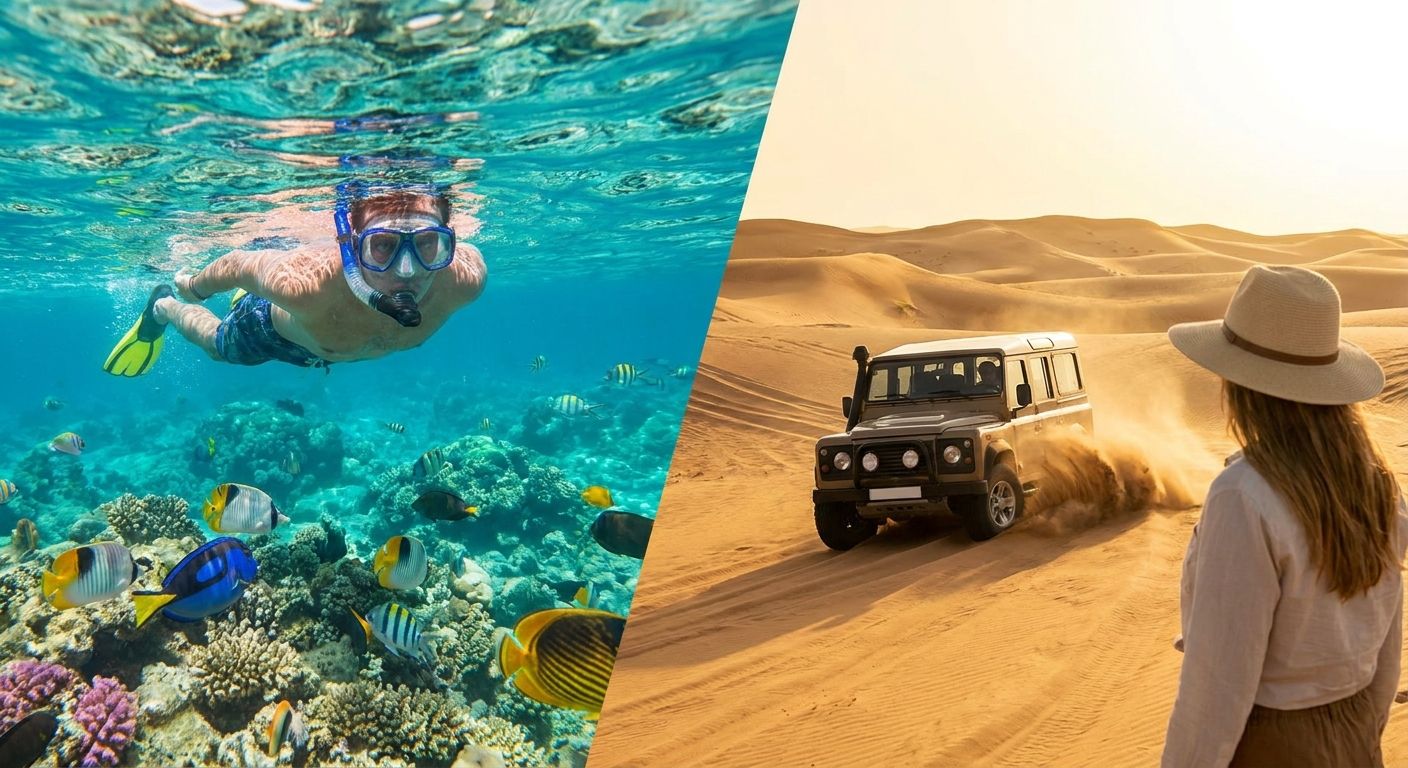
Not being able to swim doesn't rule out the Red Sea — it just changes which trip you book. Here's how to pick a snorkeling trip in Hurghada that works when you can't swim a stroke.
- Snorkeling for non swimmers in Hurghada works best on boats with dedicated flotation vests and a guide-to-guest ratio under 1:8.
- Skip any trip that markets itself as a 'party boat' — group size over 30 means less supervision in the water.
- Shore-access reefs and shallow lagoon stops beat deep-water drop-offs for first-timers who can't tread water.
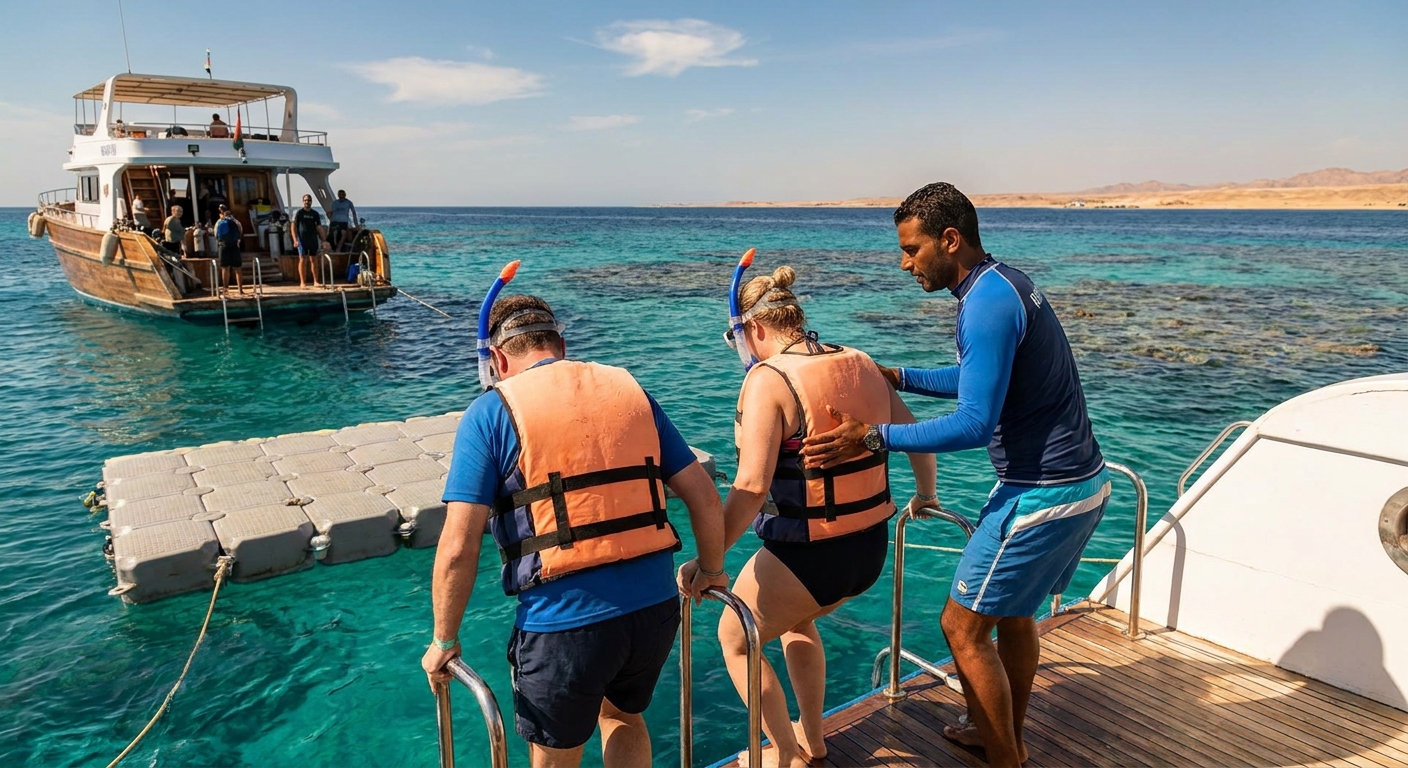
- A boat with a rear swim ladder and a crew member stationed in the water is the single biggest safety factor.
Why this matters
Most snorkeling trip listings in Hurghada are written for confident swimmers. They talk about drop-offs, current, and depth — none of which matters if you're wearing a life vest and staying near the boat.
The Red Sea off Hurghada gives non-swimmers a real advantage: shallow reef flats, warm water year-round, and calm bays protected from open swell. The trip you book determines whether that advantage actually shows up for you. Book the wrong boat and you'll spend the day watching from the deck instead of face-down over coral.
Who this is for
This guide is for travelers heading to Hurghada in 2026 who want to see the reef but either can't swim, swim weakly, or feel anxious in open water. That includes non-swimming adults traveling with a snorkeling partner, parents booking a family trip with kids under 10, and anyone recovering from a fear of deep water who wants a controlled first experience. If that's you, a private boat trip or small-group excursion with Daily Red Sea beats a mass-market catamaran every time.
What to look for in snorkeling trips for non-swimmers
Flotation gear that actually fits
A life vest that rides up around your neck is useless the moment you relax your legs. Ask before booking whether vests are sized for adults and kids separately, and whether the crew checks the fit before you go in. A properly fitted vest keeps your head above the surface with zero effort, which is the whole point for someone who can't tread water.
Guide-to-guest ratio
A guide who's watching 20 swimmers can't catch the one person quietly panicking near the bow. Look for trips that cap group size or assign a guide to stay in the water with weaker swimmers rather than supervising from the boat rail. Anything under roughly 1:8 gives you a guide close enough to reach you in seconds.
Shallow, sheltered reef access
Non-swimmers do best in bays and reef flats where the water is calm and shallow enough to stand up in if needed. Open drop-off dives that put 15-20 metres of water under you the moment you jump in are the wrong pick — the psychological weight of that depth matters even when a vest keeps you floating.
A boat with a real swim ladder
Getting back onto the boat is often the scariest part of the day for a non-swimmer, not the snorkeling itself. A wide, sturdy rear ladder with a crew member helping at the top removes that fear entirely. Boats that expect you to hoist yourself over the gunwale are a hard pass.
Pace of the day
A rushed itinerary with three back-to-back reef stops pressures people to get in the water before they're ready. A slower day with two stops and real breaks in between gives anxious swimmers time to acclimate at their own speed.
Instruction before you get wet
A five-minute briefing on how to breathe through the snorkel, how to float without kicking, and what to do if water gets in the tube changes the entire experience for a first-timer. Trips that skip this and just hand you gear are betting you already know what you're doing.
Top picks for non-swimmers
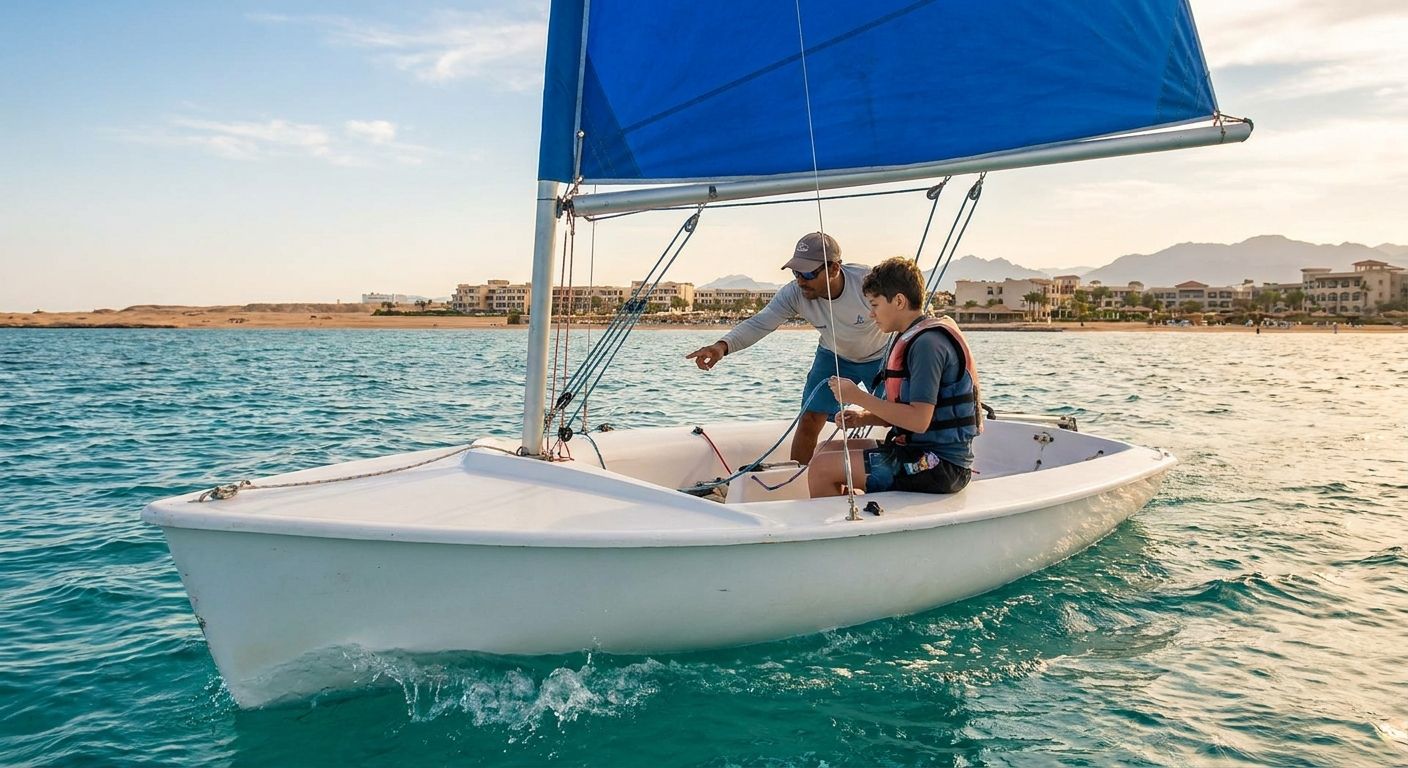
The safe pick — a private boat trip. A private booking means the guide's full attention is on your group, not managing 25 strangers. Group size is whatever you book, typically 2-6 people, and the itinerary can slow down or skip a stop entirely if someone's uneasy. Buy if snorkeling confidence matters more than saving money on a shared boat.
The reassurance pick — a guided reef excursion with in-water support. The hook here is a crew member who gets in the water alongside first-timers rather than watching from the deck. Look for trips that mention a swim guide or buddy system explicitly in the description. Buy for anyone who's never snorkeled before and wants a hand nearby the entire time.
The wildcard — a lagoon or bay-based trip instead of open reef. Bays around Hurghada often run 1-3 metres deep over sandy patches near the reef edge, which means standing up is always an option. It's a quieter day with less dramatic coral than a deep-water site, but it removes the depth anxiety completely. Consider if you want the lowest-stress possible entry into snorkeling.
Skip — large shared catamarans marketed as full-day party boats. Group sizes on these routinely run past 30 people with music, buffet lunch, and a schedule built around confident swimmers jumping straight off the top deck. Supervision gets thin fast in a crowd that size. Skip unless you're traveling with a strong swimmer who can stay with you the whole time.
For a broader rundown of what separates a good first-timer trip from a mediocre one, the best snorkeling trips in Hurghada for first-time visitors breaks down site selection in more depth.
What to avoid
- Trips that don't mention flotation gear at all in the description. If vests aren't listed as included, assume you'll need to ask — or bring your own.
- Deep-water-only itineraries. A trip built around a wall dive or drop-off site with no shallow alternative stop leaves non-swimmers with nowhere comfortable to go.
- Booking based on price alone. The cheapest boat in Hurghada is usually cheap because it's packed with people and running on a tight schedule — the opposite of what a nervous swimmer needs.
Book a private snorkeling trip
Small groups, fitted flotation gear, and a pace built for first-timers.
Verdict comparison table
| Trip type | Group size | Flotation support | Water depth | Verdict |
|---|---|---|---|---|
| Private boat trip | 2-6 | Fitted vests, guide on request | Adjustable by request | Buy |
| Guided reef excursion w/ swim support | 6-12 | Guide in water | Reef flat, shallow | Buy |
| Lagoon/bay trip | 6-15 | Vests, standing depth available | 1-3 metres | Consider |
| Large shared catamaran | 25-40+ | Vests available, less supervision | Open drop-off | Skip |
FAQ
Can non-swimmers go snorkeling in Hurghada in 2026?
Yes — a life vest and a guide who stays near the water is all that's required, since most Hurghada reef sites have shallow, calm entry points. The key is booking a trip built for first-timers rather than a large shared boat.
Do I need to know how to swim to snorkel?
No, a properly fitted flotation vest keeps you afloat without any swimming ability. What matters more is staying calm with your face in the water and breathing through the snorkel.
Is snorkeling safe for someone afraid of deep water?
It's safe when the trip picks shallow, sheltered reef sites instead of open drop-offs. Ask specifically about water depth at the snorkeling stop before booking.
What should a non-swimmer wear snorkeling?
A well-fitted life vest, snorkel mask, and fins are the minimum, with the vest being the non-negotiable piece for anyone who can't tread water. Some trips also offer a pool noodle or float ring as extra support.
How long is a typical Hurghada snorkeling trip?
Half-day trips usually run three to four hours including boat transit, while full-day trips stretch to six or more with multiple stops. First-timers generally do better on shorter half-day trips with fewer, slower stops.
Are private snorkeling trips worth it for beginners?
Yes, a private trip puts the guide's full attention on your group instead of splitting it across 20-30 strangers. That matters most in the first ten minutes in the water, when anxiety peaks for most non-swimmers.
What's the biggest mistake non-swimmers make booking a snorkeling trip?
Choosing the cheapest large-group boat without checking group size or water depth at the stop. Bigger boats usually mean less supervision and deeper, less sheltered reef access.
One last thing
The single biggest predictor of a good first snorkeling day isn't the reef, it's the ladder back onto the boat — get that detail confirmed before anything else. A calm exit from the water builds more confidence for the next stop than any amount of coral does.