Seasickness ruins more Red Sea boat days than rough water does. Most cases come from timing, seating, and diet — not the sea itself — and every one of them is fixable before you board.
- Seasickness on a Hurghada boat trip is preventable in most cases with timing, seating and medication - not luck.
- Take motion sickness tablets 30-60 minutes before boarding, not after you feel queasy.
- Sit at the back-center of the boat, near the waterline, and watch the horizon instead of your phone.
- Morning departures before 9am hit calmer water than afternoon trips on the Red Sea in 2026.
- Daily Red Sea books island boat trips with realistic sea conditions in mind, not guesswork.
Why this matters
Hurghada's Red Sea coast is generally calmer than open-ocean destinations, but wind picks up most afternoons in 2026 just like every year before it, and a fast RIB boat moving through choppy water can still put a first-timer over the rail. Snorkeling trips make it worse because you're staring down at coral instead of the horizon. If you've booked an island boat trip and you're prone to motion sickness on ferries, cars, or planes, treat this guide as your pre-departure checklist, not an afterthought.
The good news: seasickness responds well to preparation. Timing your medication, picking the right seat, and knowing what to eat beforehand solve the problem for most travelers before the boat even leaves the marina.
What you'll need
- Over-the-counter motion sickness tablets (Dramamine, Bonine, or the local pharmacy equivalent — widely available in Hurghada pharmacies)
- Acupressure wristbands, as a low-side-effect backup or for kids
- Ginger tablets, ginger candy, or ginger tea as a mild supplement
- A light breakfast — toast, crackers, banana — eaten at least 30 minutes before boarding
- Sunglasses (helps you fix on the horizon without squinting)
- A window or open-deck seat request when you book
The steps
1. Book a boat trip with a sensible departure time
Morning slots beat afternoon slots on the Red Sea. Wind typically builds through the day, so a boat leaving the marina before 9am usually crosses flatter water than one leaving at 1pm. When you're comparing options, an island boat trip built around snorkeling stops with an early departure gives you the calmest window of the day, not just the best light for photos.
2. Eat light, don't skip the meal
An empty stomach makes nausea worse, not better. Eat something plain and low-fat 30-60 minutes before boarding — toast, dry crackers, a banana. Skip greasy fried breakfasts, heavy coffee, and alcohol the night before; all three amplify motion sickness the next morning. Common mistake: travelers who skip breakfast entirely to be safe end up queasier by mid-morning.
3. Take medication before you feel anything
Motion sickness tablets work by preventing the signal, not curing it once it starts. Take an over-the-counter dose 30-60 minutes before boarding, per the package instructions — waiting until you feel off puts you 20-30 minutes behind the drug's onset time, and by then you're already fighting it. Common mistake: bringing tablets but leaving them in your bag until you're already nauseous on deck.
4. Choose your seat deliberately
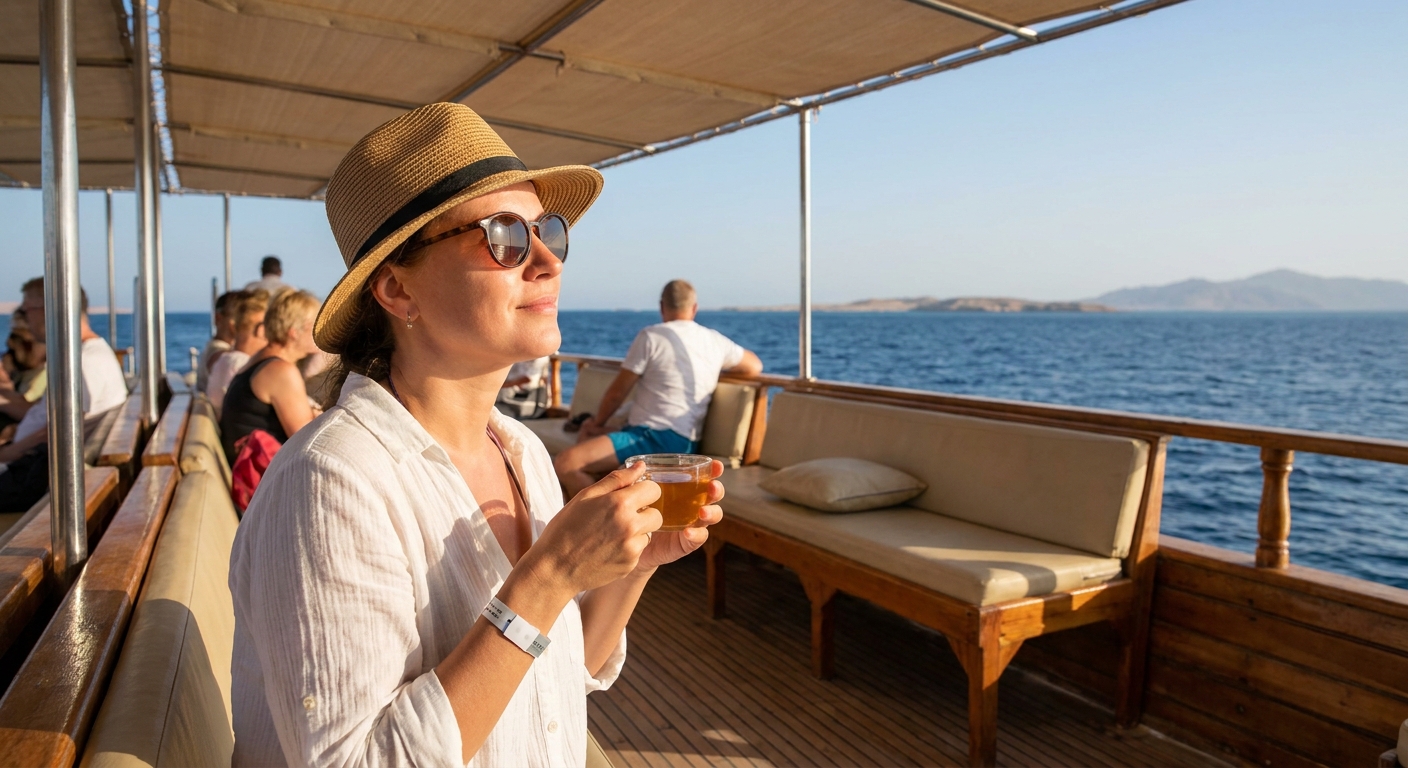
The center of the boat, low and near the waterline, moves the least. The bow pitches hardest in swell; the upper deck rocks more due to leverage. On a day boat heading out for snorkeling, sit mid-deck and avoid facing backward if you can help it. Common mistake: climbing to the top deck for the view, which is exactly where motion is amplified.
5. Fix your eyes on the horizon
Your inner ear and your eyes need to agree on what's moving. Staring at a phone screen, a book, or straight down into the water sends conflicting signals and triggers nausea fast. Look at the horizon line or a fixed point on land for the first 20-30 minutes underway — that's usually when symptoms start if they're going to. Common mistake: scrolling through photos from the last snorkel stop while the boat's still moving.
6. Use a wristband or ginger as backup, not a substitute
Acupressure wristbands and ginger tablets help mild cases and carry almost no side effects, which makes them a good option for kids or anyone who reacts badly to antihistamine-based tablets. They're not as strong as medication for moderate-to-severe seasickness, so treat them as a supplement on top of step 3, not a replacement for it.
7. Stay hydrated and skip alcohol on board
Dehydration worsens nausea, and alcohol dehydrates you while also messing with your inner ear balance. Drink water steadily through the trip rather than in one big gulp, and save the celebratory drink for after you're back on land.
Troubleshooting
- You already feel nauseous mid-trip. Move to the center of the boat, sit down, fix your eyes on the horizon, and sip water slowly. Avoid the bathroom below deck — the enclosed space with no horizon view makes it worse.
- Your kids are getting sick. Acupressure wristbands work well for children who can't take standard motion sickness tablets. Keep them on deck with a horizon view rather than resting in a cabin.
- Medication is making you drowsy. Non-drowsy formulas exist at most Hurghada pharmacies — ask before you buy. Ginger tablets are a milder, non-sedating alternative if drowsiness is a dealbreaker.
- Forecast shows rough seas the day of your trip. Ask about switching to a calmer-water snorkeling option or a later/earlier departure. A trip built for non-swimmers and nervous first-timers typically sticks to more sheltered reef sites, which helps on choppier days too.
- Snorkeling itself triggers nausea. Surface-snorkel in short 10-15 minute stretches instead of one long swim, and come back to the boat to reset your horizon view between sessions.
Tools and resources
- Motion sickness tablets from any Hurghada pharmacy (no prescription needed for standard OTC brands)
- Acupressure wristbands, packed in your carry-on before you fly
- Ginger tablets or ginger tea bags
- A sunset cruise booked for calmer late-afternoon-into-evening water if you specifically want to avoid midday wind
- Sunglasses with polarized lenses to make the horizon easier to track
What to do next
If you're planning your first Red Sea boat day in 2026 and seasickness is your main worry, book a trip built around beginner-friendly conditions rather than a fast open-water crossing. Daily Red Sea's first-time snorkeling trips stick to sheltered reef stops with shorter open-water transits, which cuts down exposure time on choppy sections.
FAQ
What's the best way to avoid seasickness on a Hurghada boat trip?
Take motion sickness medication 30-60 minutes before boarding, eat something light beforehand, and sit mid-deck facing the horizon. These three steps prevent most seasickness cases on Red Sea day boats.
Is Dramamine or Bonine better for a Red Sea day trip?
Both work; Bonine causes less drowsiness for most people, which matters if you're snorkeling right after boarding. Either should be taken 30-60 minutes before departure for full effect.
How rough is the Red Sea for boat trips in 2026?
The Red Sea near Hurghada is generally calm, especially in the morning, but afternoon wind regularly picks up chop by early-to-mid afternoon. Morning departures consistently see flatter water than afternoon ones.
Can kids get seasick on snorkeling boat trips?
Yes, and children are often more sensitive to motion than adults. Acupressure wristbands work well for kids who can't take standard OTC tablets, paired with a seat on the open deck rather than a cabin.
Do ginger tablets actually work for seasickness?
Ginger helps with mild nausea and has essentially no side effects, making it a good backup or kid-friendly option. For moderate seasickness it's not as strong as OTC motion sickness medication.
What time of day has calmer seas in Hurghada?
Early morning, generally before 9am, sees the calmest water on most days in 2026. Wind builds through the afternoon, so late-morning and afternoon departures tend to be choppier.
Should I skip breakfast before a boat trip?
No — an empty stomach makes nausea worse, not better. Eat something plain and low-fat, like toast or crackers, 30-60 minutes before boarding.
Is seasickness worse on catamarans or speedboats?
Speedboats and RIBs pitch more in choppy water because they're lighter and faster; catamarans and larger day boats tend to sit steadier. If you're prone to seasickness, ask about boat type when booking.
One last thing
Most Hurghada boat crews already build their day around the wind, not against it — that's why so many snorkeling trips leave the marina before 8am instead of at a leisurely 10am. If a boat trip you're comparing has a late-morning or afternoon departure and you know you're prone to motion sickness, ask if an earlier slot is available before you book. It's a five-minute question that solves more seasickness problems than any tablet.