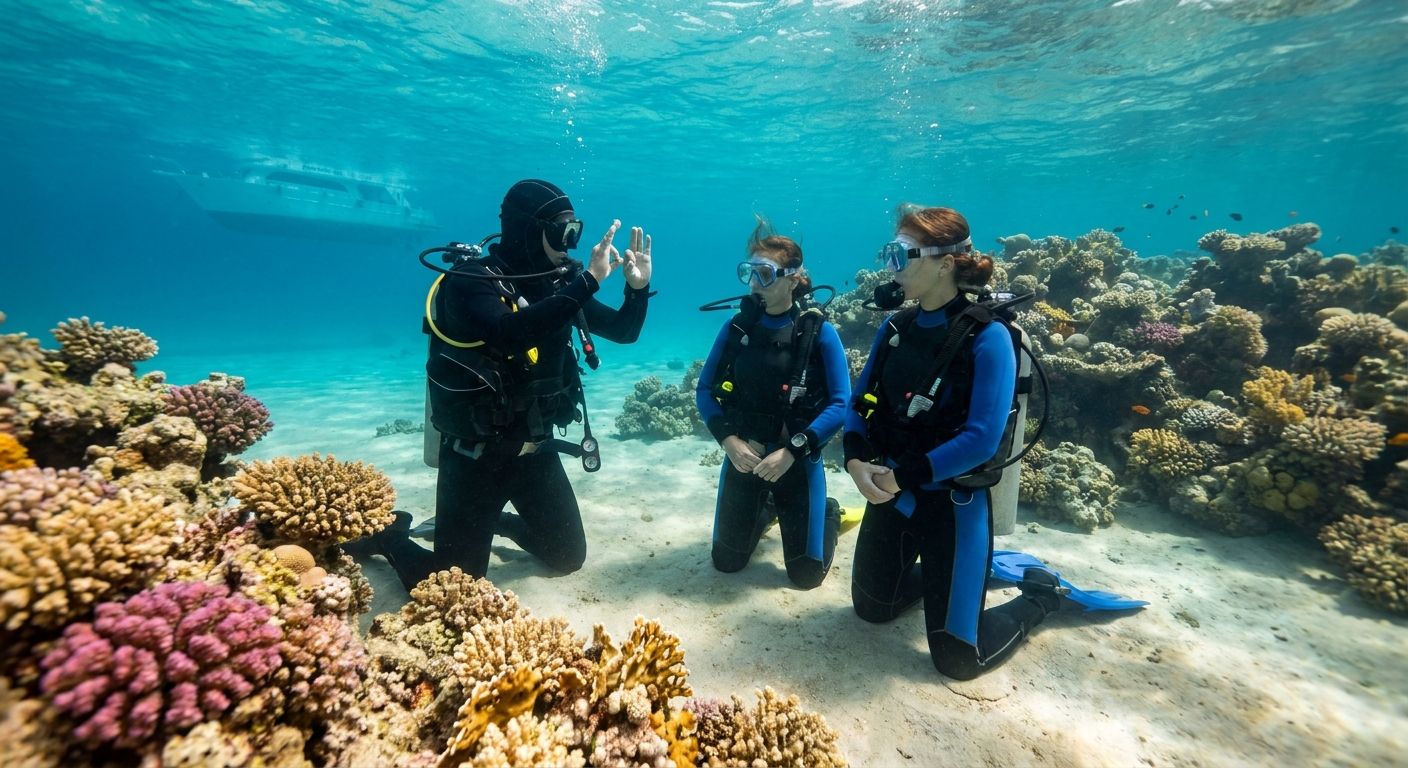
Hurghada's Red Sea reefs and wrecks reward divers who go past the basics, and the PADI Advanced Open Water course is the fastest legal way to get there — five dives, one certification, and a jump from 18 meters to 30 meters of usable depth.
- The advanced open water course hurghada program certifies divers to 30 meters across 5 dives in 2026 — Buy if you dive twice a year or more.
- Deep and underwater navigation are mandatory PADI electives; any shop skipping navigation is cutting corners — Skip that shop.
- Wreck and night dives are the strongest elective picks near Hurghada given the local wreck sites — Buy both.
- A 2-day course pace with 5 dives is standard; anything faster compresses briefings you'll need later — Wait.
Why this matters
Open Water certification caps you at 18 meters, which locks you out of most of the wreck and drop-off sites Hurghada is actually known for. Advanced Open Water raises that ceiling to 30 meters and adds a navigation skill set that Open Water never touches. Daily Red Sea runs the course as five structured dives rather than a weekend add-on, which matters because rushed adventure dives are the single biggest reason divers finish the course without retaining the skills.
The course itself is standardized by PADI worldwide, so the certification card means the same thing in Hurghada as it does anywhere else. What changes by location is which three elective dives you pick — and in the Red Sea, that choice has real consequences for what you get to see in 2026.
Who this is for
This course is built for certified Open Water divers who've logged at least a handful of dives and want access to wrecks, drift sites, and night diving without hiring a specialty guide every time. It's the right move if you're planning a Red Sea trip longer than four or five days and want more than a repeat reef tour on every outing. It is not the right starting point if you haven't dived since your Open Water checkout dives two years ago — refresh first, then advance.
What to look for in an Advanced Open Water course in Hurghada
Confirmed core dives
Every PADI Advanced Open Water course must include a Deep Dive and an Underwater Navigation dive — these two are non-negotiable, not optional electives. If an operator's itinerary doesn't name both explicitly, ask before you pay.
Elective dive selection that fits Red Sea conditions
Hurghada's value is in wrecks, drift currents, and night visibility, so a generic elective list wastes the slots you could spend on wreck or night dives. Push for electives matched to what's actually in the water here.
Small group ratios
Advanced dives run at greater depth with less margin for error than Open Water training dives, so a 1:4 instructor-to-diver ratio or tighter matters more here than it did in your first certification.
Equipment condition and air fill quality
At 30 meters, gear failures escalate faster than they do at 12 meters. Check that regulators are serviced on a visible schedule and that tanks come from a compressor with logged air-quality checks, not just a verbal promise.
Logbook and dive computer instruction
A course that hands you a computer on day one and explains nothing about deco limits at depth is skipping a safety step that matters more in Advanced Open Water than in any prior training.
Realistic pacing
Five dives crammed into a single day is a red flag. Two days lets your body off-gas properly between dives and gives instructors time to debrief each skill instead of rushing to the next tank.
The five dives: how to pick your three electives
Deep Dive and Underwater Navigation are fixed. Here's how the three elective slots stack up for Hurghada in 2026.
Wreck Dive — the signature Red Sea pick. Hurghada sits within range of well-known Red Sea wreck sites, and a wreck elective teaches penetration limits, line use, and buoyancy control you won't get from reef diving alone. This is the elective divers regret skipping most often once they see what's on the itinerary for wreck diving trips for advanced divers. Buy.
Night Dive — the wildcard that changes what you see. Reef life at night is a different ecosystem — octopus, moray eels, and crustaceans that hide by day come out after sunset, and managing a torch while holding buoyancy is worth the training slot on its own. Pair the elective with one of the operator's dedicated night diving trips once certified. Buy.
Drift Dive — the efficient pick for current-heavy sites. Learning to read current direction and stay with your group without fighting the water saves air and stress on every future Red Sea dive, since several popular sites here run moderate current year-round. Consider.
Peak Performance Buoyancy — the underrated fundamentals fix. This elective isn't glamorous, but weak buoyancy control is the most common reason certified divers scrape reefs or burn air fast. If your Open Water buoyancy felt shaky, take this over a flashier option. Consider.
Boat Dive — skip if you're already boat diving daily. In Hurghada, nearly every dive happens from a boat by default, so paying an elective slot to learn boat entry and exit techniques you're already practicing on every outing is a wasted pick. Skip.
What to avoid
- Courses that let you swap out the navigation dive. It's a mandatory PADI core dive — any shop offering to substitute it for something more fun isn't running a standard-compliant course.
- One-day, five-dive schedules. It sounds efficient, but compressing five dives including a deep dive into a single day increases decompression sickness risk and gives instructors no time to correct skills between dives.
- Elective lists padded with easy, low-value dives. In a destination built around wrecks and night visibility, using your three slots on the easiest options instead of the most useful ones defeats the point of advancing.
Book your Advanced Open Water dives
Certified diver trips with confirmed pickup and clear pricing.
Verdict comparison
| Elective | Best for | Verdict |
|---|---|---|
| Wreck Dive | Divers who want Red Sea's signature sites | Buy |
| Night Dive | Anyone staying 4+ days in Hurghada | Buy |
| Drift Dive | Current-heavy sites, air efficiency | Consider |
| Peak Performance Buoyancy | Weak buoyancy control from Open Water | Consider |
| Boat Dive | Divers new to boat-based diving elsewhere | Skip |
FAQ
What's the best advanced open water course in Hurghada?
The best option in 2026 pairs the mandatory Deep and Navigation dives with Wreck and Night electives, since those match Hurghada's actual dive sites. Confirm both core dives are named on the itinerary before booking.
How deep can you dive after Advanced Open Water certification?
Advanced Open Water certifies you to 30 meters (100 feet), up from the 18-meter limit of standard Open Water. The Deep Dive elective is what unlocks that new limit.
Is Advanced Open Water better than doing separate specialty courses?
Advanced Open Water is faster and cheaper per dive since it bundles five dives including Deep and Navigation into one certification. Standalone specialty courses make more sense only if you want deeper training in one narrow skill.
How many dives does the Advanced Open Water course require?
PADI requires 5 dives total: 2 mandatory core dives (Deep and Underwater Navigation) plus 3 elective dives you choose. Hurghada operators typically run this over 2 days.
Do I need Open Water certification before taking Advanced Open Water in Hurghada?
Yes, PADI Open Water certification is a prerequisite for Advanced Open Water. If you haven't dived in over a year, a refresher dive before starting is worth the extra tank.
What's the minimum age for Advanced Open Water certification?
PADI sets the minimum age at 12 for a Junior Advanced Open Water certification, with full adult certification available from age 15 depending on the operator's policy.
Can I choose which elective dives I want in the course?
Yes, 3 of the 5 dives are elective and instructors let you pick from options like Wreck, Night, Drift, and Peak Performance Buoyancy. In Hurghada, Wreck and Night are the most relevant picks for local site access.
How long does the Advanced Open Water course take in Hurghada?
Most Hurghada operators run the course over 2 days to space out the 5 required dives properly. A single-day, five-dive schedule is a warning sign, not a convenience.
One last thing
The navigation dive is the one divers underrate most going in and value most coming out — it's the skill that lets you actually lead a buddy pair on a reef instead of trailing an instructor for the rest of your diving life. Skip the temptation to treat it as a formality; it's the difference between a certification card and a diver who can plan a dive.