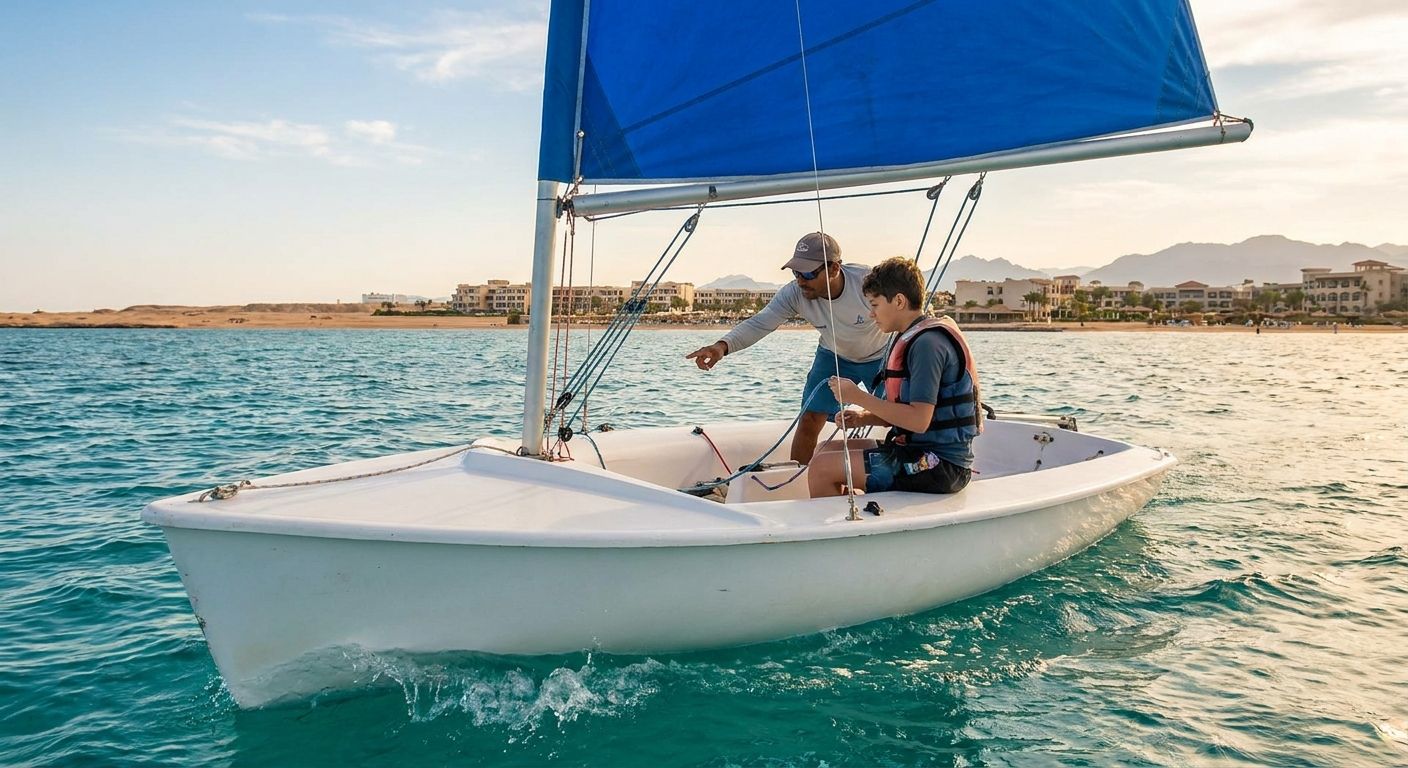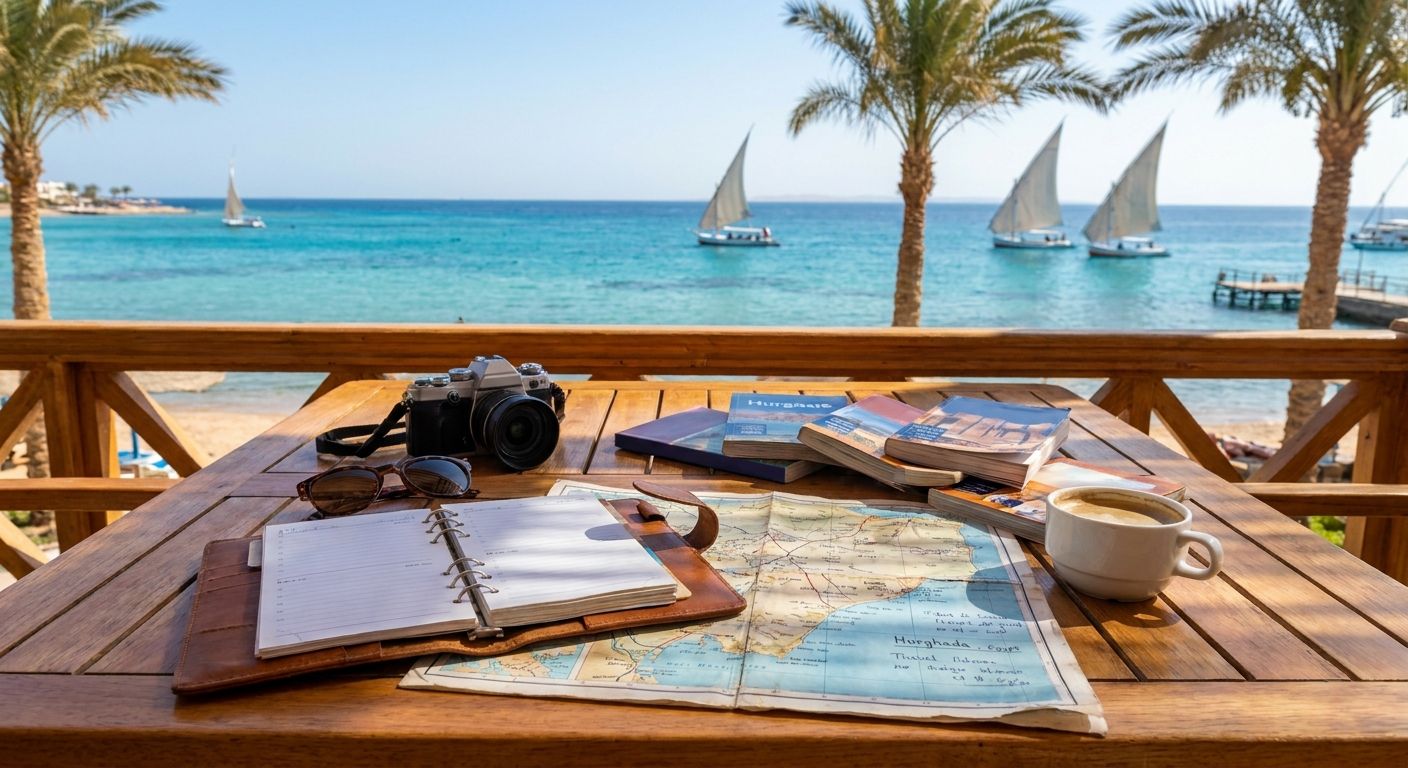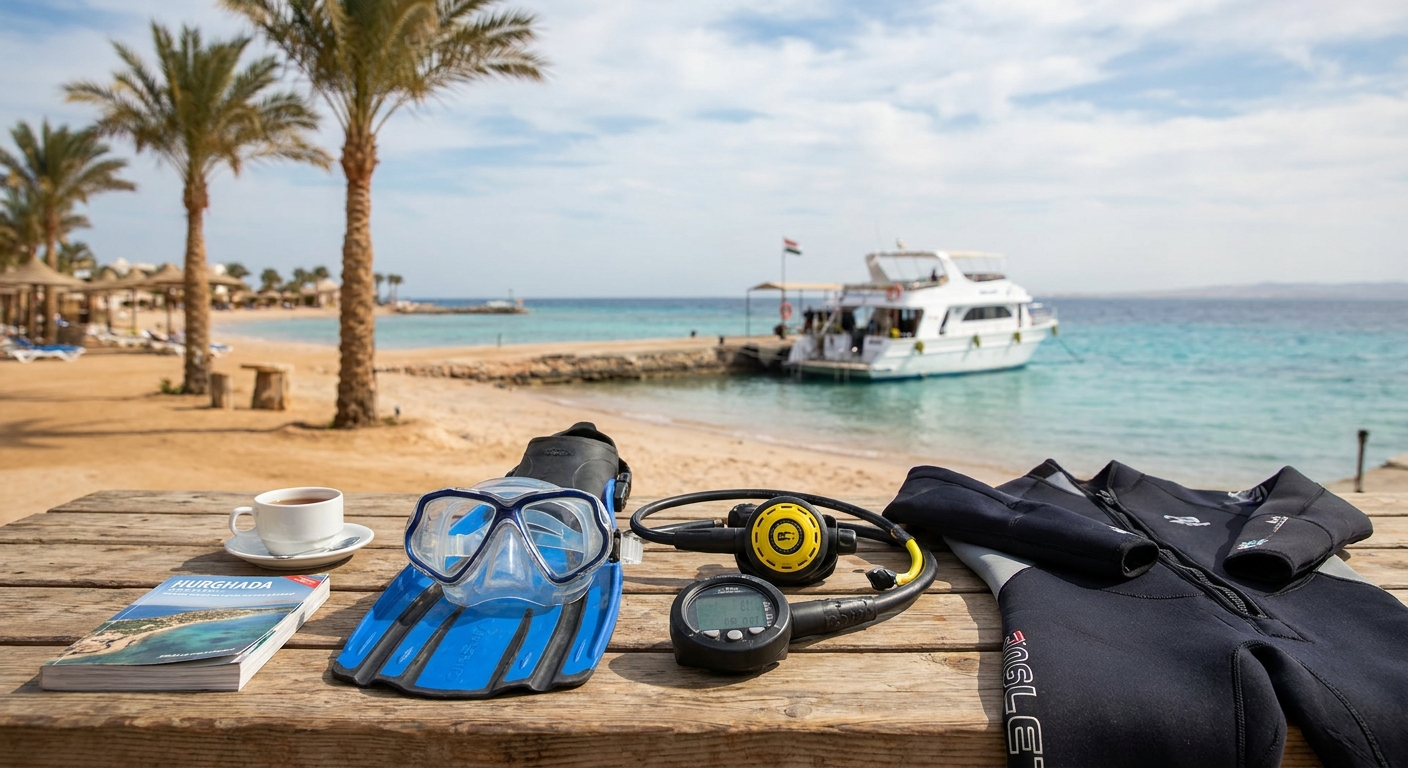
Scuba diving in Hurghada rewards divers who show up prepared: certification paperwork sorted, gear checked, and a realistic timeline before your flight home.
- How to prepare for scuba diving in Hurghada starts with a valid C-card, medical clearance, and a packed dive log.
- Red Sea water runs 22C to 28C through 2026, so a 3mm-5mm wetsuit covers most months.
- Complete beginners need a PADI Open Water course before boat diving; certified divers book direct with logbook in hand.
- Leave 18 hours between your last dive and your flight to cut decompression sickness risk.
- Skip any operator without a visible PADI or SSI plaque on the wall - verdict: Skip.
Why this matters
Hurghada dive sites sit inside the Red Sea's northern reef system, where visibility runs 20-30 meters most of the year and water temperature rarely drops below 22C even in January 2026. That combination pulls in everyone from first-time Open Water students to technical wreck divers chasing the Thistlegorm.
The problem is that "good conditions" make people careless. Divers skip medical checks, show up without a logbook, or book a boat that never asks for certification proof. Daily Red Sea runs scuba diving trips out of Hurghada daily, and the divers who have the smoothest day are the ones who prepared the boring stuff a week out, not the morning of.
What you'll need
- Certification card (PADI, SSI, CMAS, or equivalent) if you're not a complete beginner
- Dive logbook with your last 10-20 dives, especially if it's been over a year since your last dive
- Medical fitness - most operators use the RSTC medical statement; chronic conditions need a doctor's sign-off
- Swimwear, rash guard, and a 3mm-5mm wetsuit depending on season
- Reef-safe sunscreen (mineral-based - Egypt's marine parks restrict oxybenzone products)
- Refresher dive if it's been more than 12 months since your last certified dive
- A copy of your travel insurance that explicitly covers scuba diving to a depth of at least 30 meters
If you're starting from zero, book a scuba diving course in Hurghada for beginners rather than a one-off "try dive" - the course gets you certified and diving independently within 3-4 days.
The steps
1. Confirm your certification level (or book a course)
Every legitimate dive boat in Hurghada asks for a C-card before you touch a tank. If you've never dived, you need an Open Water certification, which typically runs 3-4 days and includes theory, pool sessions, and 4 open-water dives.
Complete beginners with zero water confidence should start with a structured beginner scuba diving courses program rather than jumping straight into open water. Common mistake: booking a "discover scuba" trial dive expecting it to count toward certification - it doesn't.
2. Get medical clearance early, not the night before
The RSTC medical questionnaire flags conditions like asthma, high blood pressure, ear surgery, and pregnancy. If you check any box, you need a doctor's signature, and Hurghada clinics can take 24-48 hours to process it during peak season (December through March 2026).
Do this at least a week before your trip. Common mistake: waiting until you're at the dive shop, then losing your dive day to a clinic visit.
3. Pack your logbook and certification card, not photos of them
Operators want to physically see your card or a PADI digital certification pulled up on the app. A photo on your phone works in a pinch, but a logbook showing your last dive date and depth speaks louder if it's been a while.
If your last dive was over 12 months ago, expect the divemaster to ask for a supervised refresher dive before clearing you for deeper sites. That's standard practice, not a sales tactic.
4. Match the dive site to your certification and comfort level
Hurghada's house reefs (Fanadir, Careless Reef) sit in the 6-18 meter range and suit newer divers. Advanced sites - the Thistlegorm wreck, Abu Nuhas, and the Small Giftun drift dives - run deeper and current-exposed, and most boats require Advanced Open Water or 20+ logged dives before booking.
Certified divers with logged wreck experience can book direct through scuba diving for certified divers in Hurghada rather than a generic day-boat package. If you're chasing wrecks specifically, check the best wreck diving sites near Hurghada before picking a boat, since not every operator runs the Thistlegorm route.
5. Time your last dive against your flight home
Divers Alert Network recommends at least 18 hours of surface time before flying after a single no-decompression dive, and 24 hours after multiple dives across several days. This isn't optional advice - it's the difference between a normal flight and a decompression sickness emergency at altitude.
Build this into your itinerary before you land in Hurghada, not the night before departure. Common mistake: booking a dive for the morning of a same-day evening flight.
6. Sort your airport-to-hotel logistics before dive day
A delayed or missed transfer eats into the buffer you need for medical checks, gear fitting, and rest before an early boat departure. Booking a private airport transfer from Hurghada ahead of time removes one variable from a trip where timing already matters.
Get certified before your trip
Book PADI certification in Hurghada with dates that fit your travel window.
7. Verify the boat operator before you pay
A legitimate Hurghada dive operator carries visible PADI or SSI affiliation, briefs dive plans before every trip, and caps group size relative to divemaster count - typically 1 divemaster per 4-6 divers for Open Water level groups. Ask directly; a real operator answers without hesitation.
Common mistake: booking the cheapest boat off a beach tout without checking equipment condition. Regulators and BCDs get inspected before every dive on a properly run boat - if nobody checks your gear before you step off the dock, that's a red flag.
Troubleshooting
Ears won't clear on descent. Stop, ascend a meter, and try the Valsalva maneuver again slowly. Forcing a descent with blocked ears is the single most common cause of aborted dives in Hurghada.
Mask keeps fogging. Spit-and-rinse or a drop of anti-fog gel before the dive fixes 90% of cases. A fogged mask mid-dive isn't dangerous, but it wrecks visibility and confidence fast.
Certification card lost or expired format. Most agencies (PADI included) let you pull up a digital card through their app in under a minute with an internet connection - do this before you leave the hotel Wi-Fi.
Seasickness on the boat ride out. Take medication 30-60 minutes before departure, not after symptoms start. Boat rides to sites like Abu Nuhas or Giftun Island can run 45-90 minutes each way.
Cold on multiple dives per day. A 3mm wetsuit is fine for a single dive in summer 2026 water temps, but a second or third dive the same day drops your core temperature faster than expected - a 5mm suit or hooded vest solves it.
Tools and resources
- Beginner scuba diving courses in Hurghada for structured Open Water certification
- PADI certification in Hurghada for course dates and requirements
- Certified diver trips in Hurghada for direct booking with logged experience
- Wreck diving sites near Hurghada for advanced site selection
- A private airport transfer in Hurghada to protect your pre-dive rest window
What to do next
Once your certification and logistics are locked, the next decision is which dive style fits your trip - reef diving, wreck diving, or a multi-day liveaboard. If you're weighing a longer trip, compare day-boat diving against a liveaboard before committing dates.
FAQ
How do I prepare for scuba diving in Hurghada as a complete beginner?
Book a PADI Open Water course 3-4 days before you want to dive independently, get medical clearance early, and pack a mineral-based sunscreen for the marine park rules. Complete beginners should start with a structured course, not a single trial dive.
What's the water temperature for diving in Hurghada in 2026?
Water runs 22C in winter months and up to 28C in summer 2026. A 3mm wetsuit covers most of the year; go 5mm for multiple dives per day or winter trips.
Do I need my certification card to dive in Hurghada?
Yes, every legitimate operator checks your C-card or digital certification before boarding. A logbook showing recent dive activity speeds up the process, especially if it's been over a year since your last dive.
How long should I wait to fly after diving in Hurghada?
Wait at least 18 hours after a single dive and 24 hours after multiple dives across several days, per Divers Alert Network guidance. Build this buffer into your itinerary before booking flights.
Is Hurghada good for wreck diving?
Yes, Hurghada sits close to the Thistlegorm and Abu Nuhas wreck sites, both of which require Advanced Open Water certification or significant logged dive experience. Check site-specific requirements before booking.
How much does scuba diving cost in Hurghada?
Costs vary by trip length, certification level required, and number of dives per day - check current pricing directly with the operator rather than relying on general estimates.
Can non-certified divers try scuba diving in Hurghada?
Yes, through a supervised discover scuba dive, though it doesn't count toward certification. Anyone wanting to dive independently across multiple days should book a full Open Water course instead.
What should I pack for a scuba diving trip in Hurghada?
Pack your certification card or digital app access, logbook, reef-safe mineral sunscreen, and a wetsuit matched to the season. Medical clearance paperwork should be sorted before you land, not after.
One last thing
Most divers overpack gear and underpack paperwork - the divemaster cares far more about your logbook date and medical form than your fin brand. Sort the certification and the flight-timing buffer first; everything else is replaceable at the dive shop.