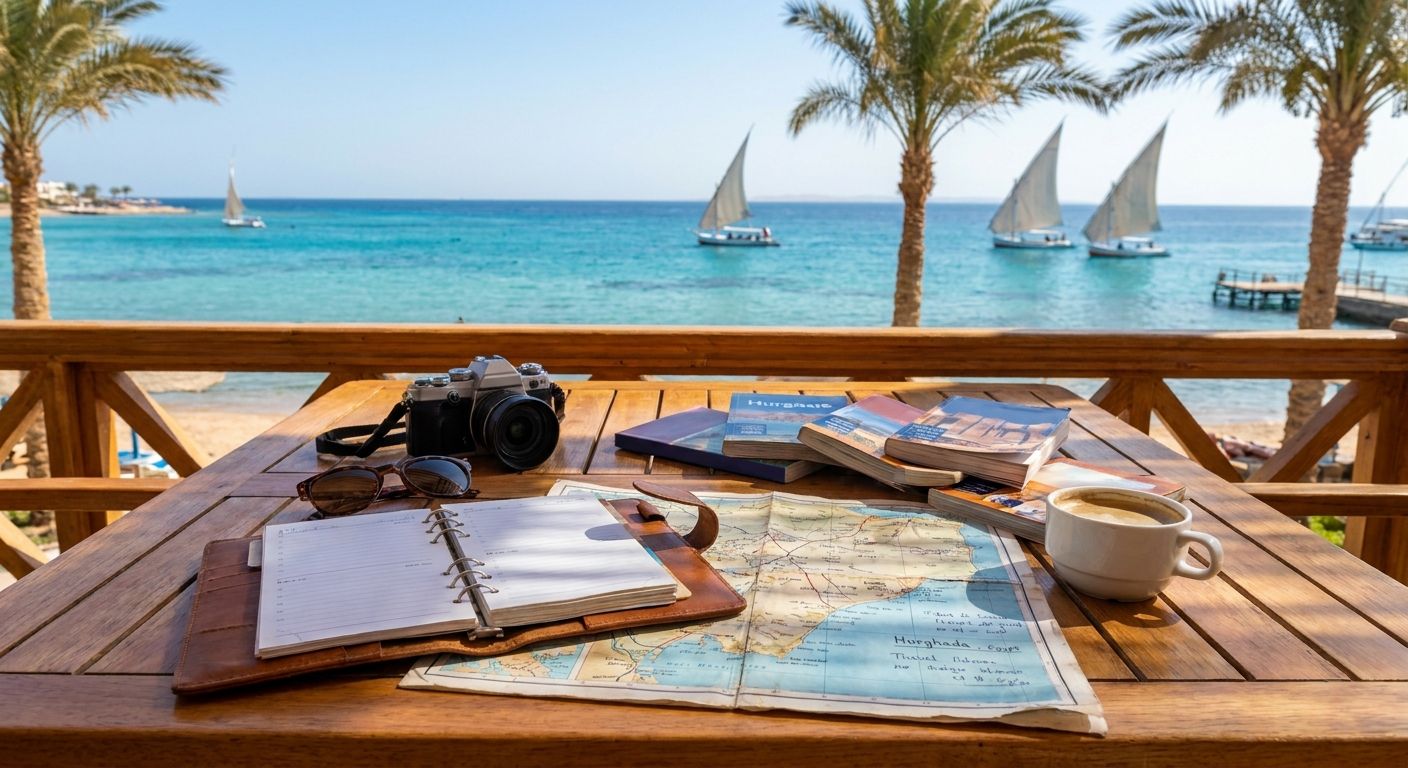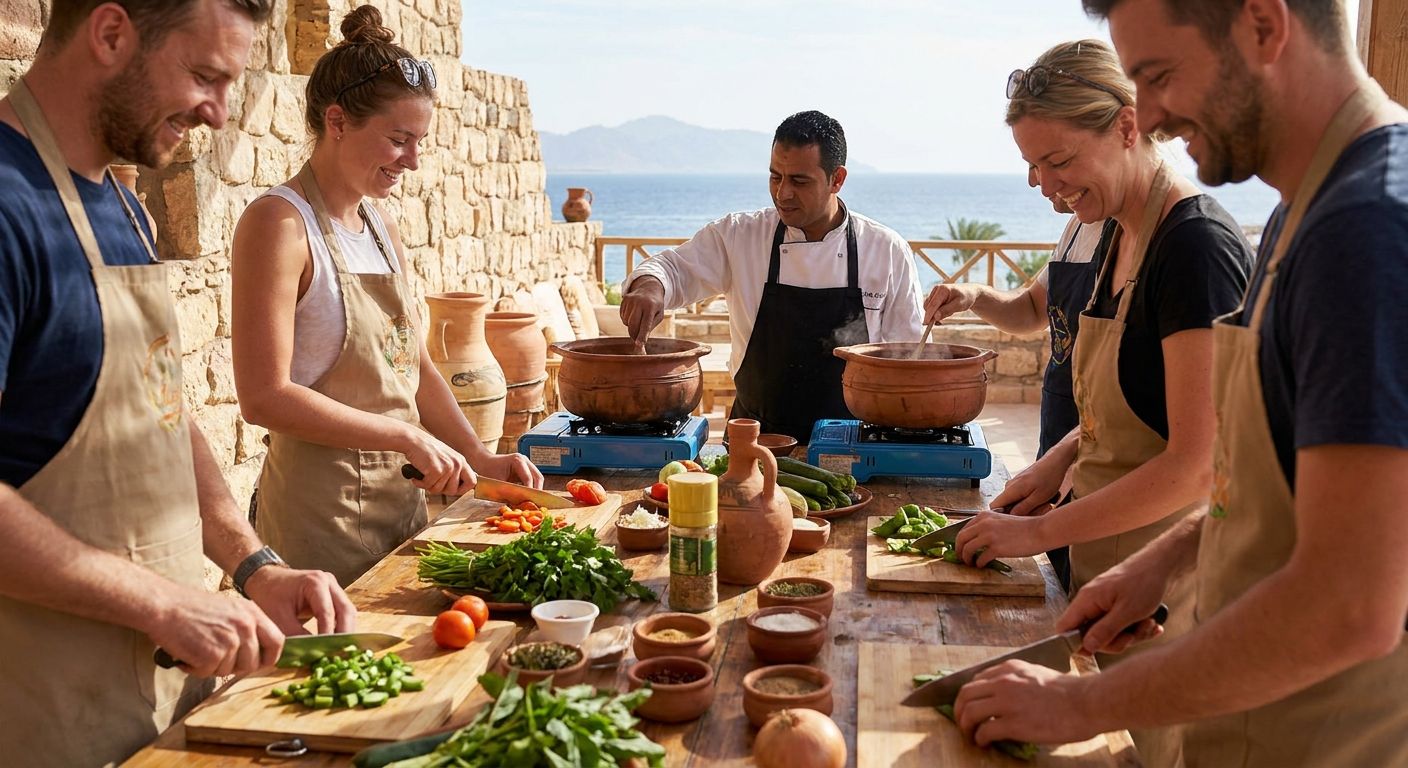
An Egyptian cooking class in Hurghada turns a beach vacation into a day you actually remember — hands on dough, market spices, and a table you built yourself instead of another resort buffet line.
- Egyptian cooking class Hurghada bookings split into market-to-table sessions and Bedouin-camp formats — pick market-to-table for real hands-on time. Buy.
- Check dietary flexibility before you book — not every kitchen setup handles allergies or vegetarian swaps on request.
- Traditional aish baladi bread bakes at roughly 250°C (480°F); a class with no oven or hearth is a demo, not a cooking lesson.
- Groups capped around 6-8 people get more bench time than large resort-style cooking shows.
Why this matters
Egyptian cuisine rarely gets airtime next to Italian or Thai cooking classes, but it has its own technique: flatbread baked hot and fast, slow-cooked molokhia, koshari layered by texture rather than sauce. Hurghada's tourism scene has leaned into food experiences over the last few seasons, and by 2026 "cooking class" gets bolted onto everything from desert safaris to boat trips. That's good for variety and bad for quality control — a 20-minute spice demo at a hotel buffet gets marketed the same way as a real hands-on session. Knowing what separates the two before you book saves you a wasted afternoon.
Who this is for
This guide is for travelers who want one day of their Hurghada trip built around food rather than water — couples looking for a different kind of date activity, families with kids old enough to knead dough, and solo travelers who'd rather learn a skill than lie on a lounger. It also fits anyone already booking a Bedouin dinner experience through Daily Red Sea who wants to understand what's actually on the plate before it arrives.
What to look for in an Egyptian cooking class in Hurghada
Hands-on time, not a demonstration
A real cooking class puts a knife or a dough ball in your hands within the first ten minutes. If the itinerary reads "watch the chef prepare" more than "you will prepare," it's a demo dressed up as a class — fine as a side activity, not worth booking as the main event.
Market or ingredient sourcing included
Classes that start at a local market or spice stall teach you more than the recipe — they teach you what fresh cumin, dried hibiscus for karkade, and Egyptian rice actually look like before they're cooked. This matters most for travelers who want takeaway knowledge, not just a full stomach.
Group size and bench space
A class of 6-8 people means everyone gets a station and real attention. Larger groups turn into a chef performing for an audience while a handful of guests actually cook, which defeats the point if you booked for the hands-on part.
Dietary accommodation
Egyptian home cooking leans on dairy (feta, labneh), gluten (bread, pasta-based koshari), and legumes (fava beans, lentils) constantly. If you have restrictions, confirm swaps before you book rather than discovering the menu on-site — the excursions for travelers with food allergies page covers what to flag in advance.
Setting and cultural context
A kitchen inside a resort teaches recipes. A class held in a Bedouin tent, a family home, or alongside a market visit teaches recipes plus the reason those dishes exist — the difference between learning to make bread and learning why bread gets baked hot and fast in the first place.
A recipe you actually take home
Written recipe cards or even a photographed measurement list matter more than they sound. Without one, most people forget the ratio for koshari's tomato-vinegar sauce within a week.
Top picks: which format actually delivers
The market-to-table format — the safe pick for first-timers. Spec that matters: it starts with a real ingredient stop, so you handle produce before you cook it, not after. Pair it with a city and market tour for souvenir shoppers if you want the shopping half extended into an afternoon. Verdict: Buy for anyone who wants both the market atmosphere and the cooking skill in one day.
The Bedouin desert-camp format — the atmospheric pick. Cooking happens over open flame or a clay oven rather than a resort stovetop, which is closer to how bread and grilled dishes were traditionally made in this region. It works best stacked onto an evening out rather than as a standalone afternoon. Verdict: Consider if you're already booking a desert evening and want the cooking element folded in, Skip if you specifically want a structured, station-by-station lesson.
Booking direct through a local operator — the reliable pick over third-party resale sites, since a Hurghada-based operator can confirm dietary swaps, group size, and pickup details directly rather than through a reseller's call center. Verdict: Buy if clear pricing and confirmed pickup matter to you as much as the cooking itself.
What to avoid
- A "cooking class" that's actually a lunch with narration. If the itinerary doesn't mention hands-on prep time in minutes or steps, assume it's a meal with commentary.
- Resort-branded sessions with no market or sourcing element. These teach a recipe in isolation with pre-portioned ingredients and skip the part that makes Egyptian cooking distinct — the produce and spice selection.
- Large-group sessions marketed as "intimate." Ask the group size number directly before paying; a real hands-on class caps out well below buffet-hall capacity.
Plan your Hurghada food day
Clear pricing · pickup confirmed · no hidden fees.
Verdict comparison
| Format | Hands-on level | Best for | Verdict |
|---|---|---|---|
| Market-to-table | High — full prep from ingredient stop | First-time visitors, food-curious couples | Buy |
| Bedouin desert-camp | Medium — open-flame cooking, less structured | Evening outings, atmosphere over technique | Consider |
| Resort buffet demo | Low — mostly watching | Skip if cooking is the main goal | Skip |
FAQ
What is the best Egyptian cooking class in Hurghada?
The best format for most travelers in 2026 is a market-to-table class that starts with a real ingredient stop before hands-on cooking. Demonstration-only sessions at resorts teach less and involve far less bench time.
Is an Egyptian cooking class worth it compared to a regular excursion day?
It's worth it if you want a skill to take home rather than another beach or boat day. Pair it with a market tour or an evening desert experience so the day covers more ground than the kitchen alone.
Can vegetarians take an Egyptian cooking class in Hurghada?
Yes — Egyptian cooking already leans on legumes, rice, and vegetables in dishes like koshari and molokhia, so vegetarian swaps are usually straightforward if you confirm them before booking.
What dishes do you typically learn in an Egyptian cooking class?
Common lessons cover aish baladi flatbread, koshari, and a mezze-style spread of small dishes. Bread-focused classes need an oven or hearth reaching roughly 250°C (480°F), so ask what's actually on-site.
How long does a cooking class in Hurghada usually run?
Most run as a half-day activity when a market or ingredient stop is included, and shorter when it's a standalone kitchen session. Confirm the itinerary breakdown before booking rather than assuming.
Do cooking classes in Hurghada accommodate food allergies?
Some do and some don't — flag allergies when you book, since many recipes use dairy, gluten, or legumes by default. Ask specifically about substitutions rather than assuming the kitchen will adjust on the day.
Is a cooking class better as a standalone booking or paired with another excursion?
Pairing works well since a cooking session alone can feel short. Combine it with a market tour in the morning or a Bedouin evening to fill out a full day around food.
What should I bring to an Egyptian cooking class?
Comfortable closed shoes, a light layer if the kitchen is outdoors or tented, and an appetite — most sessions end with eating everything you made rather than packaging it to go.
One last thing
The detail that separates a real Egyptian cooking class from a staged one isn't the menu — it's the oven. Aish baladi needs a hearth or oven pushing close to 250°C to puff and bake in minutes; without that heat, what you're making is closer to flatbread on a stovetop, not the dish Egyptians actually eat daily. Ask what the kitchen setup looks like before you hand over payment.